
The Phobia of the Beast

Medium: Oil on Canvas
Year: 2022
Dimensions: 61 × 61 cm
Collection: Artist Collection
Availability: Available
Category: Painting
About the Artwork
The Phobia of the Beast is a contemporary figurative oil on canvas painting by Tariq Gill, a Contemporary Pakistani Artist, exploring fear, vulnerability, imagination, and the psychological relationship between perception and reality. A solitary dark figure occupies the foreground, while behind him appears another version of himself enclosed behind a fence. This secondary figure is not a separate individual but a projection of the protagonist’s own imagination—an imagined self through which an inner state of vulnerability, fear, and subconscious thought becomes visible.
Approaching this imagined figure is a white beast, slowly crawling toward the enclosure. The creature is not presented as a literal animal but as a symbolic embodiment of a persistent psychological fear that has taken form within the mind. The fence introduces a complex sense of protection and confinement: it appears to offer safety from the approaching beast, yet it simultaneously reveals how fear can imprison the imagination within the very boundaries created for protection. The wide, startled eyes of the foreground figure intensify the emotional tension, suggesting that what he sees may exist as vividly within his consciousness as it does within the imagined landscape.
Through the contrast between the dark human figures and the white beast, together with the layered relationship between the real and imagined selves, Gill transforms an internal psychological state into a visible symbolic world. The painting invites viewers to consider how deeply rooted fears can shape perception, construct imagined realities, and influence the boundaries between memory, subconscious thought, and the world around us.
Curatorial Interpretation
In The Phobia of the Beast, Tariq Gill explores fear as an internal experience that can become so powerful that the mind gives it a physical form. The painting’s three presences—the foreground figure, his imagined counterpart behind the fence, and the approaching white beast—operate within different psychological dimensions of the same experience. The foreground figure represents the observer, while the enclosed figure embodies the vulnerable self projected through imagination. The beast, meanwhile, becomes the materialized image of the fear confronting that inner self.
The white colour of the beast creates a significant visual contrast with the dark human figures, preventing it from being understood simply as an embodiment of physical evil or external danger. Instead, its pale presence gives the creature an almost dream-like quality, emphasizing that its significance lies within the psychological realm. Its slow movement toward the imagined figure intensifies the sense of anticipation, suggesting that certain fears cannot simply be escaped by physical distance.
The fence becomes one of the painting’s central metaphors. It represents the instinctive desire to protect oneself from what is feared, but its enclosing structure also demonstrates the paradox of fear: the boundary created for safety can become a form of confinement. The foreground figure’s startled eyes connect the two worlds, suggesting that the imagined threat has crossed into his own consciousness.
Through expressive figuration, stark symbolic contrasts, and layered psychological imagery, Gill presents fear not as a purely external force but as something capable of constructing its own landscape within the mind. The Phobia of the Beast ultimately becomes a meditation on vulnerability and the subconscious, inviting viewers to consider how memory, imagination, and deeply rooted fears can shape what we perceive as reality.
Exhibition History
The Phobia of the Beast was previously unexhibited. First presented publicly in 2026, exclusively through the artist’s official website.
Interested in a Work?
Whether you are a collector, curator, gallery, museum, or institution, we welcome inquiries about Tariq Gill’s recent works. For information regarding artwork availability, acquisitions, exhibitions, commissions, or additional images, please get in touch.
Explore Related Artworks
Discover other works connected through shared symbolism, themes, or visual language in Tariq Gill’s artistic practice.
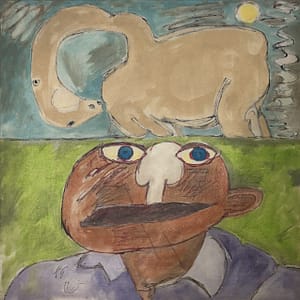
Recalling the Times of the Beasts
Oil on Canvas
61 x 61 cm
2022
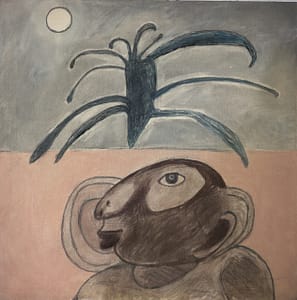
The Scorpion Tree
Oil on Canvas
61 x 61 cm
2022
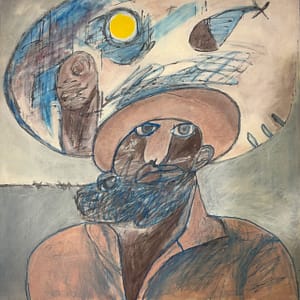
Echoes of Unspoken
Oil on Canvas
61 x 61 cm
2022